Minnesota’s cedar roofing experts since the ’80s
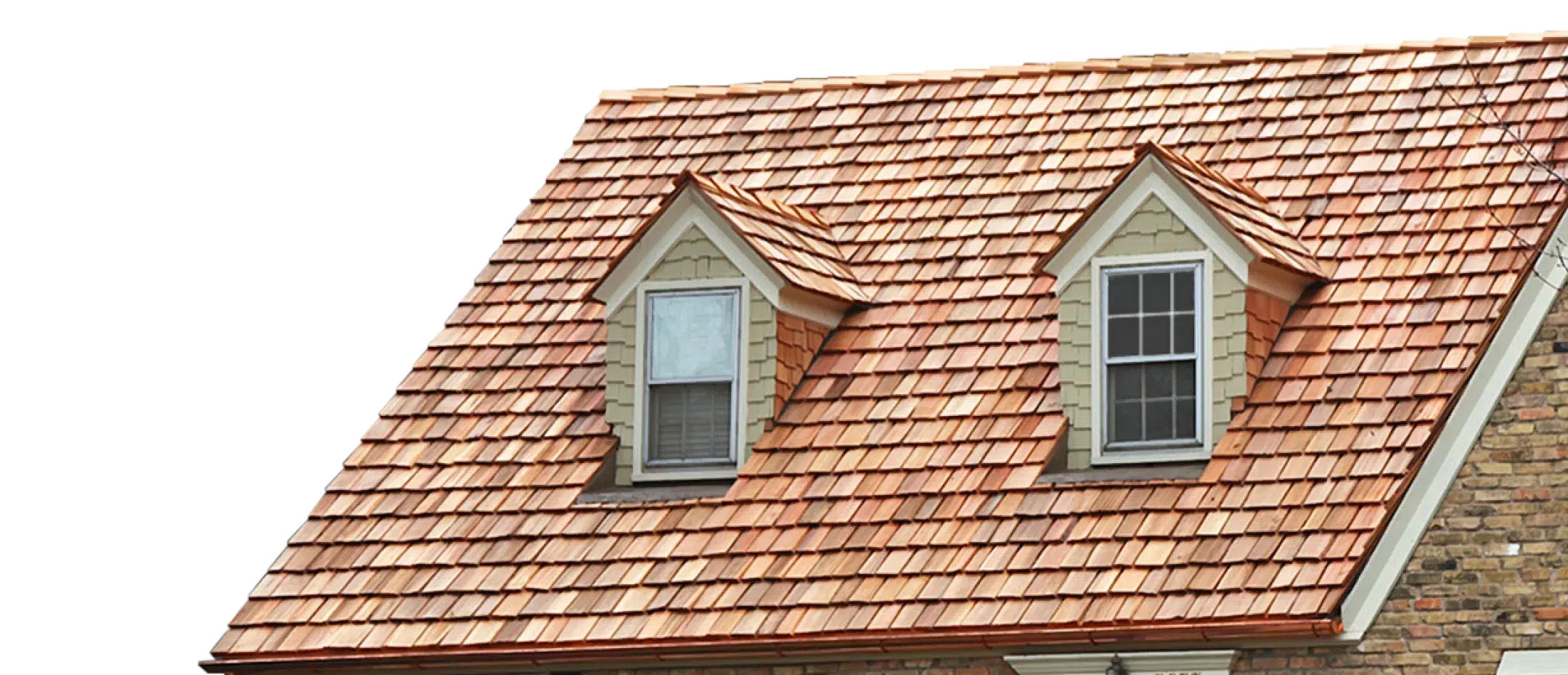
Confession time. We are admitted cedar snobs. Cedar roofing is a timeless, natural choice for homeowners seeking beauty, durability, and insulation benefits. Known for its rich texture and warm tones, cedar roofs add character to any home while providing excellent weather resistance. Wood shakes and shingles are a fantastic compromise between cost and performance when compared to other premium roofing materials. Kuhl repairs, restores and replaces more cedar roofs than any other company in Minnesota. We've been in the business of cedar roofing since mullets were popular so if you're looking for help with your cedar roof, you've come to the right place.
Want to see more of our work? Jump down to our gallery
What you need to know about our cedar roofing replacement services.

Costs
Cost for cedar shingle roof replacement
Let’s say you have a typical 3000 square foot, single story home. Your roof may be around 33 square. What would it cost to replace that cedar roof? Answer, probably around $66,000 (this is a ballpark. That includes a lot of assumptions). You could choose a standard grade, 24” medium hand-split shake that costs $675 per square (cedar only) or a heavy hand-split treated shake 24” shake for $725 per square (cedar only), resulting in a range of about $100 per square for material costs. There are many types of cedar shake and shingle material options between that have a budgetary impact on the final project cost. Our job is to help you figure out what's best for you and your home.
Other than the material selection, the biggest cost drivers in the repair or replacement of cedar shake or shingle roofs in Minneapolis is the roof size, complexity, slope and height. Labor will also increase with the additional layers of existing material to be torn off. Having a smaller yet still important affect on price are the number off penetrations and accessories such as chimneys, skylights, stacks and vents. Unlike some other types of roofing, cedar shakes and shingles allow for a certain degree of design variation. Course exposures and different alignments including straight or staggered coursing can also affect the cost of a wood roof. Some cedar roof designs are inherently more time-intensive to install and therefore more expensive.
Types of Cedar Roofs
There are four common types of cedar roofing materials used in Minnesota
The following description outlines the basic characteristics of each. These account for 98% of all wood roof applications in the greater Twin Cities area.
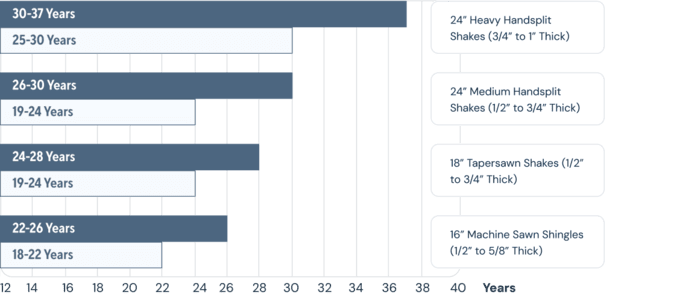
Cedar shingles are used for both roof and side wall applications and offer a lighter, more refined appearance than hand-split shakes. Certain architectural home styles are more appropriate for sawn shingles which is the primary reason they are chosen. On average, this material ranges from 1/4” to 3/8” thick at the butt end and is normally installed with 5 1/2”courses (code maximum exposure). Expect to get between 17 and 21 years of service out of an unmaintained Cedar Shingle roof in Minnesota. Approximately 13% of Twin Cities cedar roofs are done in Machine Sawn Shingles.
The least common material we see in the Twin Cities, the Tapersawn Shake, is essentially a hybrid between a common 24” hand-split shake and a 16” cedar shingle. We frequently urge clients to consider using Tapersawn Shakes instead of 16” shingles because they offer the same clean, architectural appearance but are substantially thicker. Remember, when it comes to cedar roofing, thicker is better (all else held equal of course). On average, this material ranges from 5/8” to 3/4” thick at the butt end and is installed with 7 1/2”courses (this is the building code maximum exposure for 18” shakes). Expect to get between 19 and 24 years of service out of an unmaintained Tapersawn Shake roof in Minnesota. Approximately 3% of Twin Cities cedar roofs are done in Tapersawn Shakes, but that percentage increases each year as more people become familiar with it. Tapersawn shakes also come in 24” lengths and are installed with 10” exposures. The 24” tapersawn shake installed with compressed, 7 ½” exposures is a fantastic, albeit more expensive option because it results in triple wood coverage, adding significantly more lifespan to the roof system.
The most common cedar roofing material used in Minnesota, Medium Shakes are the workhorse of the industry. They are the go-to choice for home builders primarily because it is the most affordable wood roof one can find. The wide variations in quality from one load of Medium Shakes to the next also allows roofers to cut costs significantly, thus creating the perception of more value and increasing the likelihood Mediums will be selected (over tapersawn or hand-split heavy shakes, for example). On average, this material ranges from 1/2” to 5/8” thick at the butt end and is installed with 10”courses. Expect to get between 19 and 24 years of service out of an unmaintained Medium Shake roof in Minnesota. Approximately 70% of Twin Cities cedar roofs are done in Medium Shakes.
The second most common cedar roofing material used in Minnesota. We encourage our clients to consider Heavy Shakes whenever possible because they offer substantially more long-term performance for a small increase in cost up front (compared to a medium hand split heavy shake). From the ground most people can not tell the difference between Medium and heavy Shakes other than an increased perception of quality because they have more meat. On average, this material ranges from 3/4” to 7/8” thick at the butt end and is installed with 10”courses. Expect to get between 25 and 30 years of service out of an unmaintained Heavy Cedar Shake roof in Minnesota. Approximately 20% of Twin Cities cedar roofs are done in Heavy Hand-Split Shakes.


Lifespan and Maintenance
How long will your cedar roof last?
Dark blue lines represent factory-treated cedar roofing. The figures below are for unmaintained cedar roofs. Taking care of your cedar roof with basic restoration and repairs will significantly affect lifespan outcomes.

Roofing Repair
Do you need us to repair your cedar roof? We do that too.
If your roof needs a professional inspection and repair KUHL is the team for you. Over the past 36 years we’ve inspected, diagnosed and repaired thousands of roof leaks on homes around the Twin Cities. We are frequently called in to resolve the real head scratchers that have stumped the other pros. We love a good challenge. Give us a call today.
The most common roof leaks we deal with relate to failures around roof penetrations such as chimneys, skylights, and plumbing vents. While wind driven rain can cause leaks in otherwise reliable roof systems during warmer months, snow, ice and attic condensation are a source of other headaches in the winter. Regardless of the cause, we’ve never met a roof leak that we aren’t capable of finding and repairing.
Kuhl does very nice work with lots of common sense and no BS. There was excellent coordination and logistics by Tom and we are very happy with our new cedar roof on our Lake Minnetonka home.
Bill Kanuit, Tonka Bay Wood Roof Replacement and Flat Roof Replacement

What Really Kills Most Cedar Shake Roofs
Forget hail damage, animals, moss, rot, ice and wind. The sun is your roofs’ main enemy.
View case study
Minneapolis Cedar Roof Comparisons
Four Most Common Cedar Roofs Installed in Minneapolis.
View case study
How To Identify Good Cedar Roofing
Tips on Grading the Cedar Roofing the Shows up at Your Home for Your Roofing Job
View case study

Pressure Washing Damage on Cedar Roof
Thoughts from an Honest Roofer on Washing Cedar Shake Roofing, Part One
View case study
Six Examples of How the Cheapest Company Costs the Most
Six Examples of How the Cheapest Company Costs the Most
View case study
Kickout Flashing Contractor Gives Advice on Right Versus Wrong
Kickout Flashing Contractor Gives Advice on Right Versus Wrong
View case study
Faulty Flashing Above Lake Harriet Bay Window
The Addition of Flashing to the Edge of This Roof Saved This Minneapolis Homeowner Serious Money
View case study
Solving The Mystery Leak: Using Darkness to Find the Light
A Leaking Home Gets Fixed for Good
View case study
Hiring a Cedar Roof Restoration Contractor: Honesty + Experience
Cedar Roof Cleaning Expert Rescues Excelsior Homeowner from Other ‘Expert’
View case study
Why orange you going to stain your roof?
Staining Your Cedar Shake Roof Is Not a Great Idea.... Here is why.
View case study
Good From Afar (But Far From Good)
Cedar Roof Cleaning Franchise Perpetrates Another Bad Roof Renew Job in Orono
View case study
Roofing + Design + Carpentry = Happy Client
Roofing Contractor Uses Designers and Carpenters to Help Wayzata Commercial Roofing Client
View case study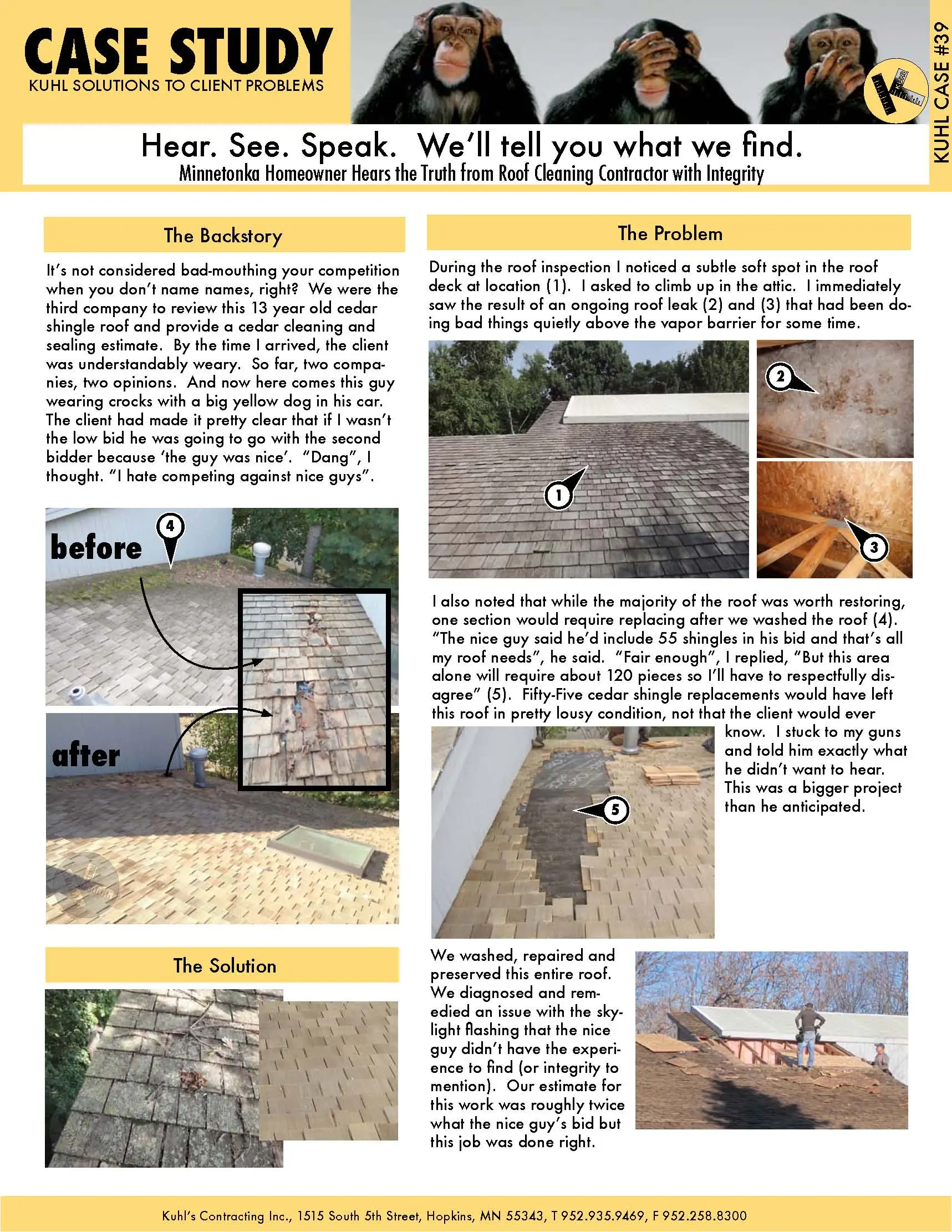
Honest Minneapolis Roof Restoration Company Calls It Like It Is. No, Seriously.
Minnetonka Homeowner Hears the Truth from Roof Cleaning Contractor with Integrity
View case study
Minneapolis Cedar Roof Expert Gives Examples of Cedar Roof Repairs
Minneapolis Cedar Roof Expert Gives Examples of Cedar Roof Repairs
View case study
How to age copper to blend in with existing copper by creating a patina
How to age copper to blend in with existing copper by creating a patina
View case study


Wondering if cedar is the right choice for your roof?

Cedar may be for you if
- Timeless Appeal: it's hard to beat the architectural appeal of a cedar shake or shingle roof.
- Value: Yes, it’s expensive compared to asphalt shingles but nothing offers the timeless authenticity of cedar at a comparable price (we’re talking to you slate and tile).
- Ice be Dammed: wood roofing offers great resistance to ice dams, and we would know.

Cedar may not be for you if
- Maintenance: Cedar roofing may require some maintenance over time to maximize value.
- Cost: Moderate to high initial cost to install.
- Restrictions: Wood roofing is becoming more expensive to insure.
Not sure if this type
of roof is good fit?
Review other type of roof page
Kuhl takes a systematic and methodical approach to how we look at every project. You'll see it when we meet.
We promise to treat you like you're in our family, because you sort of are. The Twin Cities is a small area and there's a very good chance we've worked for somebody you already know (and we love that).
We want you to become a customer for life.
- Call or email to schedule your inspection and estimate
- Information is gathered, costs are assembled, and your estimate is completed
- Your project is professionally scheduled and executed, no exceptions